

The businesses that grow sustainably don’t just work harder than everyone else.
They are built differently. Underneath the ambition, the clients and the daily momentum of a growing business, there is a financial foundation — organised, accurate and structured deliberately — that makes everything built on top of it more stable, more scalable and more resilient than it would otherwise be.
Financial organisation is not a compliance exercise. It is a growth strategy. And the businesses that understand this distinction early are the ones that scale with confidence rather than chaos.
Here is how to build the financial foundation your business needs for long-term success.
Separate Your Personal and Business Finances — Completely
This is the first step. It is also the most commonly skipped — particularly in the early stages of a business, when the administrative overhead of separate accounts feels unnecessary and the lines between personal and professional finances are easy to blur.
The cost of blurring those lines accumulates quietly and compounds significantly over time.
When personal and business finances are mixed, the financial picture of the business becomes unreliable from the beginning. Transactions that belong to the owner appear as business expenses. Income gets lost in personal cash flow. GST becomes difficult to calculate correctly. The profit and loss report requires interpretation rather than simply being read. And every downstream output — every report, every forecast, every tax return — is built on a foundation that was compromised before the first transaction was recorded.
Separate business bank accounts and a dedicated business credit card, used exclusively for business transactions from day one, eliminate this problem entirely. The financial picture of the business is clean from the start. Reconciliations are straightforward. Reports are accurate. And the credibility that clean financial records create — with banks, with accountants, with potential partners and investors — is established before it is needed.
This is not a complicated step. It is a fundamental one. And it pays dividends for the entire life of the business.
Build a Bookkeeping System That Runs Consistently
Organisation is not a one-time event. It is a habit — maintained week by week, month by month, as a non-negotiable part of how the business operates.
The most financially well-organised businesses are not the ones that do a thorough clean-up once a year before tax time. They are the ones where transactions are recorded as they occur, accounts are reconciled regularly, documentation is captured and stored systematically, and the financial records are always current enough to be useful and accurate enough to be trusted.
This consistency is what separates a financial system that genuinely supports the business from one that technically exists but never quite reflects reality. When records drift — when transactions pile up, when reconciliations are skipped, when documentation is left for later — the financial picture of the business degrades gradually until the gap between what the records show and what is actually happening becomes too wide to close without significant effort.
Building a bookkeeping rhythm prevents that drift entirely. Weekly transaction recording. Monthly reconciliations at minimum — ideally more frequently. Receipts uploaded as they occur. Invoices issued promptly and followed up systematically. A consistent, disciplined approach to the financial administration of the business that keeps the records accurate not occasionally but always.
Use Technology That Works as Hard as You Do
The tools available to small businesses for financial management have never been more powerful — and using them properly is one of the clearest ways a business can create a structural advantage in how it operates.
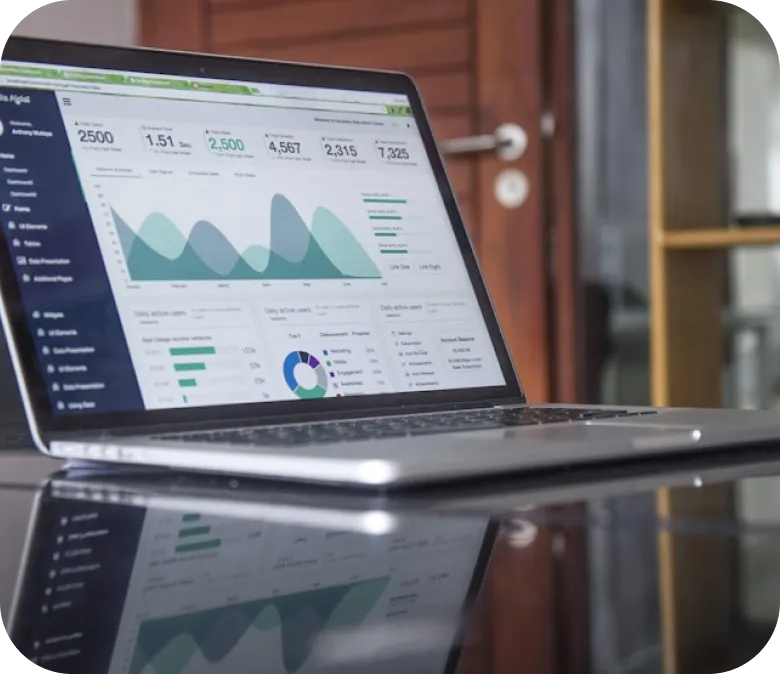
Xero, the cloud-based accounting platform Onedash Accounting works with exclusively, does far more than store financial records. Properly configured, it provides real-time visibility into business performance, automates reconciliation through live bank feeds, manages invoicing and payment tracking, handles payroll and Single Touch Payroll reporting, and produces the financial reports a business needs to understand its performance and plan its future.
The keyword is properly configured. Xero set up correctly — with a chart of accounts structured for the specific business, GST codes applied consistently, bank rules established to categorise recurring transactions accurately, and reporting configured to show what the business actually needs to see — is a fundamentally different tool from Xero set up generically and left to run without oversight.
Beyond Xero itself, the right app integrations can automate significant portions of the financial administration that currently consume manual time. Dext or Hubdoc for receipt capture and documentation management. Stripe or GoCardless for payment processing that flows directly into the accounting records. Payroll tools that integrate seamlessly with Xero and ensure every pay run is recorded, every superannuation obligation is tracked, and every Single Touch Payroll submission is made on time.
The goal is a connected financial ecosystem — one where data flows automatically from the source into the accounting system, manual entry is minimised, and the business owner has access to accurate, current financial information at any moment without requiring significant effort to produce it.
Manage Cash Flow Actively, Not Reactively
Profit tells you whether the business is viable. Cash flow tells you whether it can survive the week.
This distinction is one of the most important in small business finance — and one of the most commonly misunderstood. A business can be genuinely profitable and still face cash flow crises, because income and expenses don’t arrive on the same schedule. Invoices issued but not yet paid count as revenue. They do not count as cash. Obligations due on Friday don’t care that the payment expected on Monday hasn’t arrived yet.
Active cash flow management means understanding not just the current bank balance but the expected cash position across the coming weeks — what is due to arrive, what is committed to go out, and where the gaps and surpluses are likely to appear. It means following up outstanding invoices before they affect the cash position. Setting aside GST as it is collected so the BAS payment is always funded. Planning significant purchases around the cash flow cycle rather than simply the bank balance on the day.
A cash flow forecast — maintained consistently and updated regularly as new information arrives — is the tool that makes this possible. It transforms cash flow management from something reactive, driven by whatever the bank balance happens to show at any given moment, into something deliberate — a clear forward view of the financial position that allows the business to plan, prepare and act before pressure arrives rather than after it has already caused damage.
Budget for Where You Are Going, Not Just Where You Are
Most small businesses budget backwards — they look at what was spent last month and use it as a guide for next month. That approach manages the present reasonably well. It does nothing for the future.
Strategic budgeting starts with the destination. Where does the business need to be in twelve months? What revenue is required to get there? What investment — in people, in equipment, in marketing, in systems — is needed to support that growth? And what does the cash flow look like across the journey, accounting for the timing gap between investment and return?
A well-constructed budget answers these questions with numbers rather than estimates. It sets clear targets for revenue and expenses, creates accountability for financial performance month by month, and provides the benchmark against which actual results can be measured — revealing early whether the business is on track or whether something needs to change before the deviation becomes too large to correct easily.
Budgeting and forecasting together — one setting the financial targets, the other projecting the cash position required to reach them — give the business owner a complete picture of the financial journey ahead. Not a guarantee. A map. And a map, however imperfect, is always more useful than navigating without one.
Understand Your Numbers Well Enough to Act on Them
Financial reports are only useful if the person reading them understands what they say.
This sounds obvious. In practice, many small business owners receive monthly reports — profit and loss, balance sheet, cash flow summary — and file them away without fully understanding what they reveal about the performance and health of the business. Not because they aren’t intelligent or capable, but because nobody ever took the time to explain what to look for, what the numbers mean in the context of the specific business, and what action they suggest.
Understanding your numbers at a practical level doesn’t require accounting expertise. It requires familiarity with a small number of key metrics — gross profit margin, net profit margin, accounts receivable days, cash conversion cycle — and a regular habit of reviewing them with enough attention to notice when something has changed and why.
Is the gross margin holding steady or contracting? If it is contracting, is it because costs are rising, because pricing hasn’t kept up, or because the mix of services has shifted toward less profitable work? Is the accounts receivable balance growing faster than revenue — suggesting that clients are taking longer to pay and cash flow pressure is building? Is the net profit improving month on month, or is revenue growth being absorbed by expenses that are expanding at a faster rate?
These are not difficult questions. But they are powerful ones — and the business owner who asks them regularly, from a foundation of accurate financial records, is making decisions with a quality of information that competitors who don’t ask them simply don’t have.
Get Professional Support Before You Think You Need It
One of the most consistent patterns in small business finance is that professional bookkeeping support gets engaged too late — after the records have drifted, after the errors have compounded, after the compliance risk has accumulated to a level that requires significant work to address.
The businesses that benefit most from professional support are not the ones that bring in a bookkeeper to fix a problem. They are the ones that bring in a bookkeeper before the problem has a chance to form — establishing correct systems from the beginning, maintaining accurate records consistently, and building the financial foundation that supports every stage of growth the business goes through.
At Onedash Accounting, we work with small and medium businesses across Australia at every stage of their journey — from the earliest days of setting up correctly, through the growth phases where financial complexity increases and the stakes of getting it wrong rise accordingly, to the scaling stages where strong financial infrastructure becomes the difference between growth that is sustainable and growth that creates chaos.
The value of that support is not just in the work that gets done. It is in the work that never needs to be undone — the errors that are never made, the compliance risks that never materialise, the catch-up projects that never become necessary because the records were always where they needed to be.
The Foundation That Everything Else Is Built On
Long-term business growth is not just a function of sales, marketing or product quality. It is a function of the financial foundation that supports every decision, every investment and every step forward the business takes.
Separate accounts. Current records. Correctly configured systems. Active cash flow management. Strategic budgeting. Clear reporting. Professional support that is proactive rather than reactive. These are not advanced requirements for large businesses. They are the fundamental building blocks of a financial system that works — for any business, at any stage, in any industry.
The businesses that build this foundation early grow differently from the ones that don’t. They make better decisions. They scale with less chaos. They navigate pressure with more composure. And they arrive at every significant milestone — every hiring decision, every investment, every growth opportunity — with the financial clarity to seize it confidently rather than approach it with uncertainty.
That clarity is available to every small business. It starts with the decision to build the systems that create it — and the commitment to maintain them consistently once they are in place.
At Onedash Accounting, that is exactly what we help businesses do. From the first conversation to every month that follows, we build and maintain the financial foundations that turn long-term growth from an aspiration into a plan — and a plan into a reality.
Ready to organise your finances for growth? Get in touch with Onedash Accounting today.